How best to protect your drinking water supply from cryptosporidium
Cryptosporidium, a protozoan parasite has been detected in municipal drinking water supplies in Surrey this week. Gastrointestinal illness known as cryptosporidiosis will result when ingested causing Diarreah, the most common symptom but can also lead to dehydration, stomach cramps and pain, nausea and vomiting and a mild fever. Persistent infection can also lead to fatigue and weight loss. .
This weeks report is not unusual, we hear the same problem throughout the UK over the years and this won’t be the last time for sure. In 1997 it entered the municipal water in Surrey due to a series of failures related to water treatment and infrastructure.
Inadequate Water Treatment facilities that are not fully equipped or maintained to handle Cryptosporidium is the likely reason for the contamination but the problem has to come from somewhere and its most likely that the source of the water itself, that includes rivers, was contaminated. Agricultural runoff is one source but, with high rainfall of late, we have the ever present problem of daily, if not hourly sewage discharge into rivers that then feeds back into our drinking water treatment plants.
The danger of contaminated water bypassing treatment stages or entering the distribution system is also a problem. Leaks or cross-contamination such as the recent event at a storage reservoir in Surrey where animal feases entered drinking water supplies due to a faulty air intake
Cryptosporidium, a resilient protozoan parasite with a hard outer shell that makes them highly resistant to environmental stresses and common disinfectants, including chlorine that is typically used in water treatment processes.
Removing Cryptosporidium from drinking water requires a combination of advanced treatment technologies and rigorous monitoring. PureH2O Ltd, A Surrey based private water treatment company offer some of the most effective methods on the market including Ultrafiltration, a process PureH2O’s Engineering Director, Dr Terry Cummings, pioneered in the 80’s and even developed plants for Yorkshire water. UltraFiltration is a 0.08,icron low pressure membrane effective enough to remove not only Cryptosporidium oocystsbut all other pathogens and microbes for that matter. They use the process in many of their water treatment systems Granular Media Filtration:
Disinfection can also be used to treat the problem. UVPro from PureH2O uses Ultraviolet (UV) light to irradiate the parasite by damaging its DNA, preventing it from reproducing and causing infection.
Roger Wiltshire, Managing Director of PureH2O Ltd, says that for the most effective treatment for Crypto and other microbiological pollutants is their UFO3™ in line sterilisation product that combines the removal of pathogens with ozone sterilsiation. Ozone is a powerful oxidant that can inactivate Cryptosporidium.It is 300 times faster that chlorine and requires no chemical handling or resupply since it produces the ozone itself in-situ.
Roger Wiltshire is a pioneer of private and commercial drinking water treatment systems. He has developed and designed Reverse Osmosis systems for over 30 years and his Company, PureH2O Ltd is subsequently regarded as one of the most innovative companies in the market place.
Wiltshire says; “Reverse Osmosis is one of my favourite processes and removes crypto in much the same way that UltraFiltration, only, the membrane is tighter, down to 0.0001microns so it works more effectively at higher pressure. It makes the perfect best tasting drinking water on the planet”.
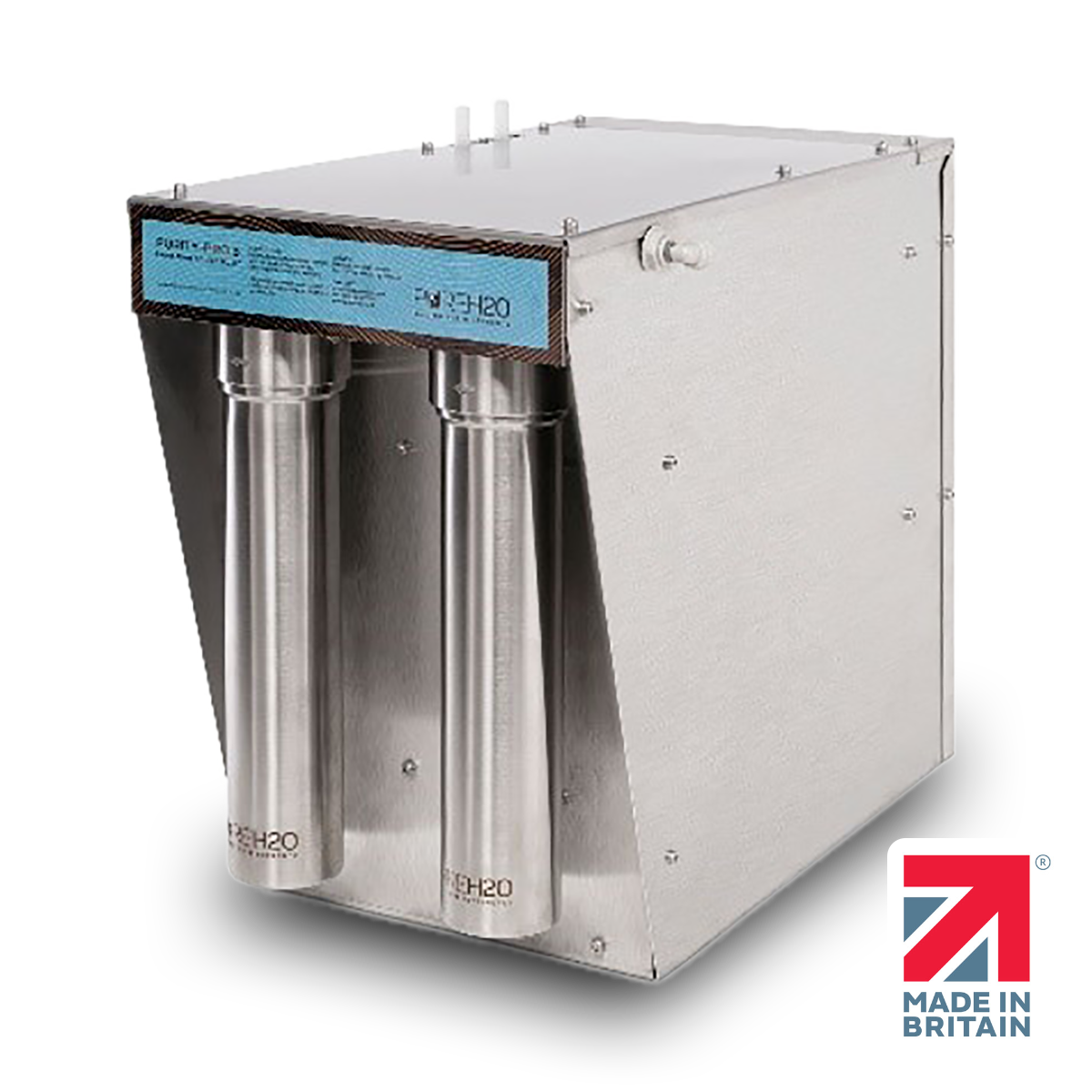
His PurityPRO™ (Reverse Osmosis, RO) model was designed in 2019 is the only all stainless steel system on the market and made locally in Woking. Wiltshire says;
“when we designed the PurityPRO™ here in Woking, the goal was to remove 50% of polymers from the typical RO systems we imported from America. We not only achieved a 90% reduction in polymers but we reduced water consumption by 70% whilst power consumption dropped by 90%” We parted ways with our American suppliers and started manufacturing in Woking sourcing over 90% of components within 5miles of our offices.
PureH2O Ltd offer a range of systems that effectively treat or remove Cryptosporidium from drinking water, protecting public health and making it safe for all to drink. Several notable instances of Cryptosporidium contamination in British tap water have been reported over the years.
- Lancashire (2015):
- Incident: A major Cryptosporidium outbreak affected over 300,000 residents in the Preston, South Ribble, Chorley, Fylde, and Wyre areas.
- Cause: The exact source of contamination was not definitively identified, but it was suspected to be related to agricultural runoff contaminating the water source.
- Response: United Utilities issued a boil water notice and implemented additional filtration and disinfection measures.
- Northamptonshire (2008):
- Incident: Cryptosporidium contamination was detected in the Pitsford Water Treatment Works serving Northampton.
- Cause: The contamination was linked to the failure of filtration systems at the treatment plant.
- Response: A boil water advisory was issued, and the treatment plant underwent significant upgrades to its filtration systems.
- Reading (2005):
- Incident: A Cryptosporidium outbreak affected the water supply in Reading, impacting thousands of residents.
- Cause: It was traced back to the River Thames, which had become contaminated possibly due to agricultural and sewage runoff.
- Response: Thames Water issued a boil water notice and enhanced their water treatment protocols.
- Bournemouth (1997):
- Incident: An outbreak of Cryptosporidium affected the water supply in Bournemouth.
- Cause: The contamination source was believed to be the River Stour, influenced by agricultural runoff.
- Response: Measures were taken to improve water treatment and monitoring systems.
- Ceredigion, Wales (2005):
- Incident: The Llyn Cwellyn water supply in Ceredigion was found to be contaminated with Cryptosporidium.