
The Real Cost of Water Softeners in the UK: A 2026 Price and Value Guide
The true water softener cost is rarely found on the initial invoice; it’s measured in the decades of protection afforded to your home’s most delicate infrastructure. If you reside amongst the 13 million UK households plagued by hard water, you likely already understand the quiet frustration of limescale dulling your aesthetic finishes and compromising the efficiency of your appliances. It is a common concern, yet many homeowners find themselves caught between the false economy of budget units and the perceived opacity of bespoke system pricing.
This guide provides a sophisticated breakdown of the total cost of ownership, from initial precision engineering to the long-term savings on salt and maintenance. You’ll discover how the 2026 regulatory landscape, including the Water Reform Bill and new efficiency standards, impacts your choice of technology. We will examine the unrivalled value of systems designed to last 15 to 20 years, ensuring you have the confidence to choose a solution that reflects the pinnacle of British craftsmanship and purity. By the end of this guide, you’ll understand why the right investment today is the only way to guarantee a lifetime of soft, pure water.
Key Takeaways
- Understand how hard water acts as a silent tax on your household by forcing heating systems to work harder and shortening the lifespan of premium appliances.
- Gain clarity on the total water softener cost by distinguishing between temporary budget models and bespoke British engineering designed for 20-year longevity.
- Navigate the 2026 regulatory landscape and professional installation requirements to ensure your home remains compliant and your warranty protected.
- Quantify the substantial return on investment achieved through reduced detergent consumption and the preservation of high-end kitchen and bathroom finishes.
- Discover why the ultimate value lies in a system that integrates seamlessly with advanced purification technology like the PurityPRO Home Water Purifier.
The Hidden Financial Impact of Hard Water in British Homes
Hard water is often dismissed as a mere cleaning nuisance, a dusting of white powder on a tap or a cloudy residue on glassware. In reality, for the 13 million households in the UK living in hard water areas, it represents a significant, recurring financial drain. This “Limescale Tax” quietly erodes your household budget, affecting everything from energy efficiency to the longevity of your most prized possessions. When evaluating the total water softener cost, you must first calculate the heavy price of doing nothing.
The mineral content in British water, primarily calcium and magnesium, doesn’t stay in suspension when heated. It precipitates as solid calcium carbonate, a substance that acts as a powerful thermal insulator. In a home without protection, this mineral coating begins to build up within days, creating a barrier between the heat source and the water it’s meant to warm. This isn’t just a technical detail; it’s a direct cause of escalating household expenses that many families overlook until a system failure occurs.
Limescale and Your Energy Bills
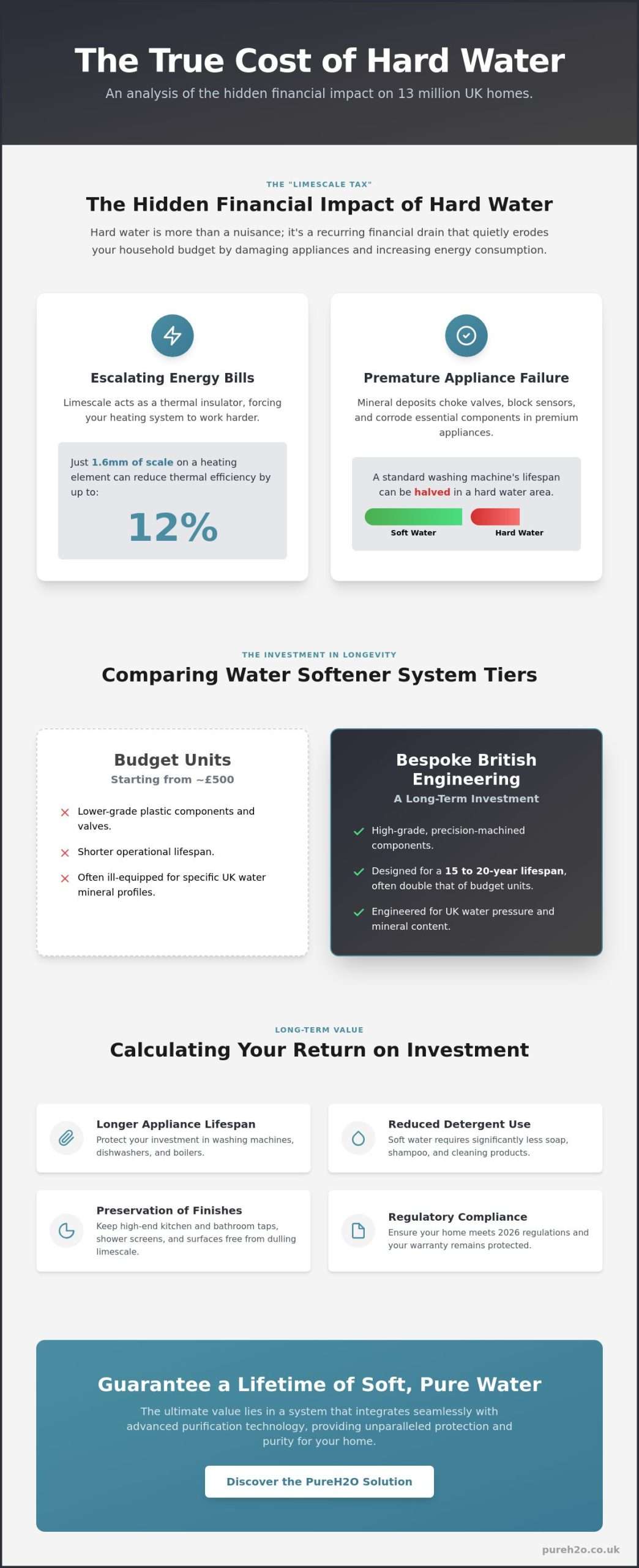
Calcium carbonate is an incredibly effective insulator. Whilst this property is useful in some industrial contexts, it’s catastrophic for your home’s heating system. Research indicates that just 1.6mm of scale buildup on a heating element can reduce thermal efficiency by up to 12%. Thermal efficiency loss is the quantifiable reduction in a system’s ability to transfer heat from a fuel source to the water, resulting in wasted energy. Over a five-year period, this translates into a substantial increase in gas and electricity bills, as your boiler works harder to achieve the same internal temperature. Understanding how water softeners work to prevent this mineral accumulation is the first step in reclaiming control over your utility expenditure.
The Cost of Premature Appliance Failure
For those who invest in premium kitchen brands like Miele or Gaggenau, the impact of hard water is particularly galling. These appliances are engineered for precision and longevity, yet their intricate internal components are highly susceptible to mineral damage. Limescale doesn’t just sit on the surface; it chokes valves, blocks sensors, and corrodes heating coils in high-end coffee machines and steam ovens. A standard washing machine in a hard water area may see its lifespan halved, necessitating a replacement cycle that is both expensive and environmentally irresponsible.
Contrast the manageable water softener cost with the daunting £3,000 or more required for a new boiler installation or the repeated repair bills for a luxury dishwasher. If mineral damage does necessitate a full replacement, homeowners often have to explore Vaillant Boiler Installation to restore their heating infrastructure. The financial logic is clear: soft water isn’t a luxury, but a necessary safeguard for your home’s most significant investments. By removing the minerals that cause scale, you ensure your appliances perform to their original British engineering specifications for their full intended lifespan.
Initial Investment: Comparing Water Softener System Types and Prices
When investigating the water softener cost for a British home, it is essential to look beyond the surface-level price tags found on high-street retail sites. The market is broadly divided into three distinct tiers: entry-level units, mid-range appliances, and bespoke engineering solutions. Entry-level models, often starting around £500, typically rely on lower-grade plastic valves and resin with a shorter operational life. Whilst these may seem attractive initially, they often lack the precision required to handle the specific mineral profiles found in UK groundwater. In contrast, bespoke systems are designed with high-grade components that provide unrivalled longevity, often doubling the lifespan of their budget counterparts.
The price of a system reflects more than just its softening capacity; it indicates the quality of the internal architecture. Precision-machined valves and high-capacity resin beads ensure that the system operates at peak efficiency for decades rather than years. For the modern British homeowner, aesthetic integration is equally vital. Bespoke systems are frequently engineered to be compact, fitting seamlessly into the refined cabinetry of a contemporary kitchen without compromising on technical performance. Choosing a system specifically designed for UK water pressure, whether you have a traditional gravity-fed system or a modern unvented high-pressure setup, is crucial for maintaining flow rates across a large property.
Single-Cylinder vs. Twin-Cylinder Systems
The fundamental difference between these designs lies in their ability to provide uninterrupted service. Single-cylinder units must undergo a “regeneration” cycle to cleaned the resin. During this period, the system typically engages a hard water bypass, meaning any water used in the home will be unsoftened. For luxury homes with high demand, this is often unacceptable. Twin-cylinder designs solve this by using one tank whilst the other regenerates, ensuring 24/7 soft water availability. Whilst twin-cylinder models represent a higher initial water softener cost, usually starting from £1,600, they are the standard for those who refuse to compromise on water quality.
Electric vs. Non-Electric Softeners
Reliability is a cornerstone of value. Electric softeners require a power source and rely on electronic circuit boards which can be vulnerable to the humid environment of a kitchen cupboard. Non-electric, water-controlled systems use the kinetic energy of moving water to trigger regeneration. These systems are remarkably dependable and often more efficient, as they only regenerate based on actual water usage rather than a set timer. For a substantial four-bedroom home, a non-electric twin-cylinder system offers the best long-term value, as it avoids the common failure points of electronic components. If you are seeking the pinnacle of reliability, exploring the range of Water Softeners engineered for the British home is a logical next step.
Beyond the Purchase Price: Installation and Ongoing Maintenance Costs
When calculating the total water softener cost, the hardware is only the initial consideration. Professional integration and the subsequent operational cycle define whether the system remains a high-performance asset or becomes a maintenance liability. In British properties, where plumbing configurations range from traditional gravity-fed systems to contemporary unvented cylinders, precision installation is non-negotiable. A standard professional installation fee for a UK dwelling typically averages around £350, though this reflects a basic setup rather than the bespoke integration required for high-end cabinetry.
Professional Installation Requirements in the UK
The complexity of modern British plumbing requires a sophisticated approach to installation. Systems must utilise WRAS-approved components to ensure compliance with the Water Supply (Water Fittings) Regulations 1999. This is particularly critical in homes equipped with Megaflow or unvented cylinders, where maintaining high flow rates and managing pressure is essential for the performance of luxury rain showers. Substandard installation frequently results in catastrophic leaks or significant pressure drops that compromise the performance of your entire home’s water distribution system.
Salt Consumption and Running Costs
Running costs are primarily driven by the consumption of block or tablet salt. For an average family of four, monthly salt expenditure typically ranges between £5 and £10, depending on local water hardness and household usage. However, the engineering of the softener itself plays a decisive role in these ongoing expenses. High-efficiency systems are designed to use significantly less salt and water during each regeneration cycle by precisely calculating the exact moment the resin requires cleaning. Over a 10-year period, the cumulative savings on salt and water in a high-end unit can be substantial, often offsetting the initial price gap when compared to budget models that regenerate on a crude, inefficient timer basis.
Calculating the Long-Term ROI of a Premium Water Softener
The initial water softener cost is best viewed as an investment in a home’s long-term financial health. Whilst the capital outlay for a premium system is higher than budget alternatives, the cumulative savings over a decade often exceed the original purchase price. One of the most immediate fiscal benefits is the dramatic reduction in household consumables. Hard water minerals actively neutralise soap molecules; this forces you to use significantly more product to achieve a lather. With soft water, you can reduce your consumption of detergents, shampoos, and conditioners by up to 50%, a saving that compounds month after month.
Beyond the ledger, there is the intangible luxury of the soft water experience. It provides a refined quality to daily rituals, leaving skin feeling hydrated and hair possessing a natural lustre that hard water simply cannot replicate. This lifestyle enhancement is accompanied by a significant environmental ROI. By requiring fewer cleaning agents, you directly reduce the volume of plastic bottles entering the waste stream and minimise the chemical load discharged into British waterways. Over a 10-year period, these factors combine to transform the water softener cost into a quantifiable profit for the discerning homeowner.
The “Invisible” Savings: Boiler and Pipework Longevity
Environmental Impact and Sustainability
Choosing a high-performance system is a commitment to a sustainable future. Every millimetre of scale removed from your heating system lowers your carbon footprint by reducing the energy required to heat your water. A premium, British-engineered system embodies the “buy it once” philosophy, avoiding the environmental cost of the frequent replacement cycles associated with inferior products. This approach aligns luxury living with ecological preservation, ensuring your home operates with maximum efficiency and minimal impact. To see how these savings apply to your specific property, you can explore our range of Water Softeners and calculate the PureH2O difference for yourself.
Why PureH2O Represents the Ultimate Value in Water Softening
PureH2O does not simply assemble components; we engineer sophisticated solutions that reflect a deep heritage of British precision. When assessing the total water softener cost, it is vital to distinguish between a functional appliance and a high-performance engineering asset. Our philosophy is rooted in the belief that luxury and scientific authority must coexist. This is why our systems are never offered as a “one size fits all” compromise. Each installation is a bespoke undertaking, tailored to the specific flow rates and plumbing architecture of your property to ensure unrivalled performance without the need for invasive cabinetry modifications.
The hallmark of our technical excellence is a commitment to the 99.99% purity standard. Achieving this level of water quality is a multi-stage process that begins with effective softening. By removing the harsh minerals that define the UK’s hard water regions, we create the perfect foundation for advanced purification. This methodical approach ensures that every drop of water in your home contributes to a lifestyle of refined health and environmental responsibility, grounded in tangible ecological benefits.
The PureH2O Difference: Engineering for Longevity
Reliability is the cornerstone of true value. Whilst mass-market units frequently rely on generic plastics that degrade over time, we utilise high-grade materials designed to outlast the typical 10-year replacement cycle of budget alternatives. Our systems are built to perform for 15 to 20 years, significantly reducing the lifetime water softener cost through durability and efficiency. Because we are committed to British manufacturing, our clients benefit from local technical support and a supply chain that prioritises precision over volume. We invite you to view a water softener not merely as a utility, but as the essential foundation of a healthy, sustainable home.
The Complete Purity Ecosystem
A PureH2O system is designed to function as part of a cohesive, high-performance ecosystem. Softened water is not just a benefit for your skin and appliances; it is a technical necessity for protecting the delicate membranes within our PurityPRO Home Water Purifier. By removing scale-forming minerals at the point of entry, the softener ensures that our reverse osmosis and deionisation technologies can operate at peak efficiency for longer. This synergy extends to our Quatreau smart taps, where softened water prevents the accumulation of scale in boiling and chilled water circuits. To experience the pinnacle of water technology in your own home, you can Request a bespoke water analysis and quote from our experts and discover the PureH2O difference.
Securing the Future of Your Home’s Water Quality
Choosing a water treatment system is a definitive step towards protecting your home’s infrastructure and enhancing your daily wellbeing. As we have examined, the real water softener cost is not merely the figure on the price tag; it is the total value gained through decades of appliance protection, reduced energy expenditure, and the elimination of the “Limescale Tax.” By opting for bespoke engineering over mass-market compromises, you ensure that your system integrates perfectly with your property’s unique plumbing requirements and maintains unrivalled flow rates.
PureH2O has led the way in British-made engineering since 1991, bringing industrial-grade technology into the domestic sphere to meet our uncompromising 99.99% purity standards. Our solutions are designed to outlast budget alternatives, providing a sustainable and sophisticated answer to the challenges of hard water. It is time to move beyond temporary fixes and embrace a permanent solution that reflects the pinnacle of technical excellence and luxury living.
Discover the PureH2O Difference: Bespoke Water Softening Solutions
We invite you to take the first step towards a home defined by purity and precision. Your investment today will safeguard your household and your most prized appliances for many years to come.
Frequently Asked Questions
Is a water softener worth the cost in the UK?
A water softener is a highly cost-effective investment for the 13 million UK households located in hard water regions. The initial expenditure is offset by the dramatic extension of appliance lifespans and the preservation of internal heating elements. By preventing the “Limescale Tax,” homeowners avoid the premature replacement of boilers and luxury kitchen hardware, making the total water softener cost a rational long-term financial decision for the discerning property owner.
How much does it cost to install a water softener in a 4-bedroom house?
Installation costs for a four-bedroom property vary based on the complexity of the existing plumbing, such as the presence of unvented Megaflow cylinders. Whilst a standard professional fee often starts around £350, bespoke integrations into refined cabinetry may require additional precision. It is essential to employ qualified engineers to ensure compliance with UK water regulations and to prevent pressure drops in high-demand luxury showers or designer taps.
Does a water softener increase my water bill?
There is a marginal increase in water consumption during the regeneration cycle, as the system must cleaned the resin beads with brine. However, high-efficiency British systems use sophisticated sensors to regenerate only when necessary, minimising waste. This small operational increase is vastly outweighed by the energy savings achieved through maintaining scale-free heating elements in your boiler and hot water cylinders, which lowers your overall household expenditure.
What is the average lifespan of a premium water softener?
A premium, British-engineered water softener typically provides reliable service for 15 to 20 years with appropriate maintenance. This longevity is achieved through the use of high-grade materials and precision-machined valves that outlast the mass-market plastics found in budget units. Choosing a bespoke system ensures that the internal components are robust enough to withstand the specific mineral profiles found in UK groundwater, justifying the initial water softener cost over two decades.
Can I install a water softener myself to save on costs?
Whilst DIY installation is technically possible, it is strongly discouraged for high-performance systems. Professional installation ensures full compliance with the Water Supply (Water Fittings) Regulations 1999 and protects your manufacturer’s warranty. Incorrect integration can lead to catastrophic leaks or significant pressure drops, which often result in repair expenses that far exceed the initial savings of a self-installed unit. Professional engineers guarantee the system performs to its technical specifications.
How much salt does a water softener use per month?
An average family of four typically consumes between £5 and £10 of block or tablet salt per month. The exact volume depends on your household’s water usage and the hardness level of your local supply. Modern, high-efficiency softeners are designed to optimise salt consumption, ensuring that the resin is cleaned using the minimum amount of brine required to maintain peak ion-exchange performance without unnecessary environmental impact or waste.
Will a water softener save me money on my energy bills?
You will see a quantifiable reduction in energy expenditure because soft water prevents the accumulation of insulating limescale on heating elements. Since even a thin layer of scale can significantly reduce boiler efficiency, keeping your system clear ensures maximum heat transfer. This prevents your boiler from working harder than necessary, lowering gas and electricity bills whilst simultaneously reducing your home’s overall carbon footprint and environmental burden.
What happens if I don’t service my water softener?
Neglecting annual servicing can lead to a gradual decline in ion-exchange efficiency and may eventually void your warranty. Over time, internal valves can become fouled and the resin bed may lose its capacity to effectively remove minerals from the water. Regular professional maintenance ensures the system continues to operate at the pinnacle of its design specifications, protecting your investment and ensuring the continued delivery of soft, pure water throughout your home.
Disclaimer
The content of this article represents the views of the author and 36years practical experience.