

Health Risks of Limescale in Water: A 2026 Guide to Hard Water Purity
The presence of stubborn, chalky residue on domestic appliances not only poses a nightmare when cleaning, but scale deposits may act as biological magnets for the very contaminants homeowners seek to avoid. For decades, many individuals in hard water regions have contended with persistent mineral deposits on fixtures or the irritation of dry skin and dull hair. This repetitive cycle of cleaning and physical discomfort is often overlooked when refurbishing bathrooms or kitchens, yet the underlying health risks of limescale in water should perhaps warrant a little extra thought when building new, refurbishing homes or replacing boilers.
This 2026 guide examines the scientific reality behind mineral accumulation, moving beyond aesthetic concerns to demonstrate how high-performance water purification protects physical wellbeing and preserves high-end domestic infrastructure. The following analysis provides clarity regarding the hard water debate, investigating the correlation between scale and microbial proliferation whilst detailing how the PureH2O Ltd difference achieves an unrivalled 99.99% purity rate. By installing an advanced water SoftenerPro for bathing water and a PurityPRO reverse osmosis system for drinking water, homeowners can eliminate the scale nightmare and start to enjoy their water quality with total confidence in the purity of the household supply.
Key Takeaways
- Understand the scientific composition of limescale and why regional water hardness variations across the UK significantly impact your home’s purity levels.
- Examine the health risks of limescale in water by distinguishing between beneficial dietary minerals and the non-bioavailable inorganic solids found in untreated hard water.
- Learn how the “soap curd” effect from mineral-heavy water contributes to chronic skin irritation and the proven exacerbation of conditions such as atopic dermatitis.
- Identify the physical and sensory indicators of hard water, ranging from metallic taste profiles to the chalky deposits that compromise appliance longevity.
- Discover how the PurityPRO system utilises British-engineered reverse osmosis technology to achieve a definitive 99.99% purity rate for your household.
The Composition of Limescale: More Than Just Chalky Buildup
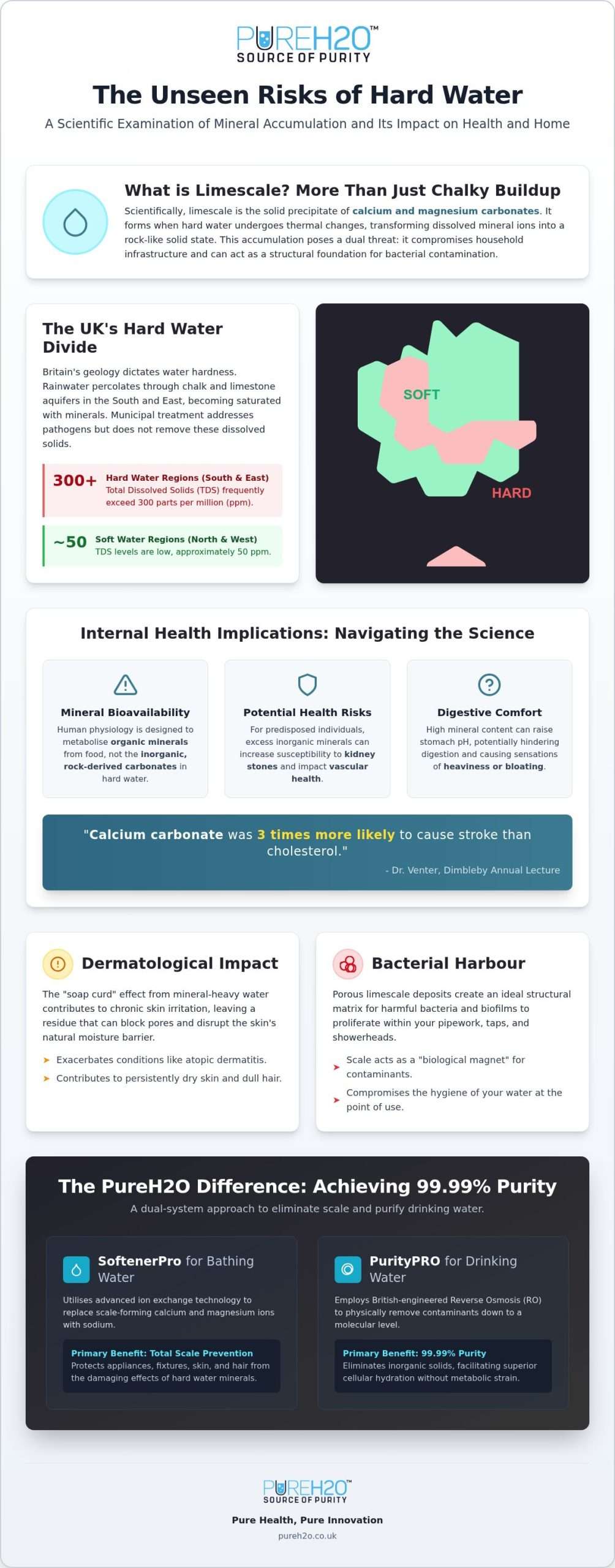
Limescale is scientifically classified as the solid precipitate of calcium and magnesium carbonates. This substance forms when hard water undergoes thermal changes, triggering a process of rapid crystallisation that transforms dissolved ions into a rock-like solid state. This chemical transition is the primary driver behind the health risks of limescale in water, as these deposits act as a structural foundation for further contamination within domestic infrastructure. Whilst frequently dismissed as an aesthetic concern, the presence of scale indicates water that is heavily saturated with inorganic minerals.
To better understand the chemical transition from dissolved minerals to solid scale, the following analysis is instructive:
The United Kingdom possesses a distinct "Hard Water Map" that dictates the level of mineral saturation in the domestic supply. Regions in the South and East of England are typically situated upon vast limestone and chalk aquifers, which results in water that is heavily saturated with calcium and magnesium. Conversely, the North and West often benefit from softer supplies, usually from the Lake District, where dissolved solids are low, approximately 50ppmTDS. Municipal treatment facilities are engineered to address pathogens but do not remove these dissolved minerals, leaving the water in an aggressive state as it enters the property. The Composition of Limescale remains a persistent challenge to homeowners.
Why British Tap Water is Naturally Hard
Rainwater becomes naturally acidic as it absorbs carbon dioxide from the atmosphere. As this water percolates through limestone and chalk aquifers, it dissolves the rock, becoming saturated with inorganic calcium and magnesium ions. This geological journey results in a high degree of mineral saturation before the water reaches the domestic tap. Standard municipal treatment processes do not alter this mineral profile, as these substances are not classified as primary contaminants under current regulations.
The Difference Between Soft, Hard, and Pure Water
Total Dissolved Solids (TDS) levels in hard water regions frequently exceed 300 parts per million. The SoftenerPro from PureH2O uses ion exchange to replace calcium with sodium that prevents scale but does not produce water that is fit to drink. Purified water, achieved through the high-performance Reverse Osmosis (RO) technology of PureH2O Ltd, removes these inorganic solids entirely. This process allows health-conscious homeowners to have the purest drinking water quality whilst bathing in lovely softened water.
Internal Health Implications: Navigating the Scientific Debate
Whilst municipal suppliers often advocate for the consumption of hard water as a source of essential minerals, Navigating the Scientific Debate requires a more technical understanding of nutrient bioavailability. Human physiology is optimised to metabolise minerals from organic, chelated sources found in food rather than the inorganic, rock-derived carbonates present in tap water. For individuals with a genetic predisposition, the health risks of limescale in water include an increased susceptibility to the formation of kidney stones. This occurs as the body attempts to process excess calcium and magnesium carbonates that it cannot efficiently utilise.
Scientific research also examines the cumulative impact of high inorganic mineral intake on vascular health. Meticulous attention to water quality is not merely a matter of appliance maintenance; it is a fundamental aspect of biological preservation. By ensuring that the internal organs are not tasked with filtering out unnecessary sediment, the health risks of limescale in water are significantly mitigated. Pure drinking water allows for superior cellular hydration without the metabolic strain associated with high-TDS water consumption.
Renowned scientist, Dr Ventner, stated in his talk on the Dimbleby annual lecture that calcium carbonate was 3 times more likely to cause stroke than cholesterol.
Digestive Comfort and Nutrient Absorption
Our stomach acid has a pH of 1 for good reason. It kills bacteria and pathogens and kick- starts the digestion process. High concentrations of inorganic minerals can temporarily raise the pH balance of the stomach, potentially hindering the efficiency of the digestive process. This may cause a sensation of heaviness or bloating following the consumption of mineral-saturated water. Advanced reverse osmosis purification to a 99.99% standard allows the water to function as a more effective solvent, facilitating the transport of nutrients at a cellular level and supporting overall metabolic comfort.
The Biofilm Risk: Limescale as a Bacterial Harbour
A significant, yet frequently overlooked, concern is the tendency for limescale to act as a structural matrix for microbial proliferation. The porous and uneven surface of mineral deposits inside domestic plumbing provides an ideal environment for bacterial colonies to organise into resilient biofilms. These biofilms protect pathogens from standard chemical treatments, creating a hidden reservoir of contamination within the domestic supply. To address this, PureH2O Ltd ultraviolet sterilisation serves as a critical secondary defence, eradicating 99.99% of bacteria that might otherwise occupy these mineral harbours. This thorough engineering ensures that the water remains fresh and pure for the health-conscious consumer.
Dermatological and Respiratory Impact: The External Risks
While internal mineral intake remains a significant concern, the health risks of limescale in water are often felt most acutely on the body’s exterior. One of the most pervasive issues is the "soap curd" effect. When calcium and magnesium ions encounter the fatty acids in soaps and shampoos, they form an insoluble, sticky precipitate. This residue does not rinse away; instead, it adheres to the skin and scalp, clogging pores and trapping opportunistic bacteria. For the discerning individual, this results in a persistent cycle of dry, irritated skin and hair that lacks its natural lustre.
The Science of Eczema and Hard Water
Clinical observations have established a clear link between hard water and the exacerbation of atopic dermatitis, or eczema. Calcium ions directly disrupt the skin’s delicate barrier function, making it more susceptible to environmental irritants. Additionally, because hard water inhibits soap from lathering, users often compensate by using excessive amounts of detergents. This "double-hit" of mineral irritation and chemical overexposure is a primary trigger for flare-ups. Switching to softened or purified water provides a foundational step in dermatological care.
Respiratory Health and Shower Vapour
A frequently overlooked aspect of the health risks of limescale in water is the impact of aerosolised minerals. As you shower, the heat transforms mineral-heavy water and chemicals such as chlorine and VOCs (Volatile Organic Chemicals) into steam, which is then inhaled into the lungs. For those with sensitive airways or respiratory conditions, this mineralised vapour can act as a persistent irritant. Furthermore, the porous nature of limescale buildup inside showerheads creates a protected sanctuary for pathogens such as Legionella. These bacteria thrive within the scale matrix, away from the reach of traditional disinfectants, only to be released in a fine mist during use. A whole-house approach to water purity is essential to mitigate these invisible respiratory threats. The FilterPro from PureH2O plumbed onto the mains water supply physically removes chemicals at the point of entry to the house.
Assessing Your Risk: A Checklist for Hard Water Homes
Identifying the health risks of limescale in water requires a simple hardness test. While the chalky residue on your shower screens and inside your kettle provides an obvious physical warning and you are likely to see unsightly scum forming on the surface of tea. Coffee and other beverages are likely to taste unexpectedly flat.
A comprehensive assessment of your water quality should include the following observations:
- Persistent dry skin or brittle hair immediately after bathing.
- A noticeable lack of rich lathering when using premium soaps or detergents.
- Chalky white deposits on taps, showerheads, and high-end kitchen surfaces.
- A metallic or "dusty" taste profile in unpurified tap water.
- Increasingly high energy bills despite consistent household usage.
The Hidden Costs of Limescale
Limescale functions as an unintended thermal insulator. When scale coats the heating elements of your boiler or luxury kitchen appliances, it forces the system to work harder to achieve the same temperature. Data indicates that scale buildup can increase energy consumption by at least 25% in hard water regions. This inefficiency not only inflates your utility bills but also drastically reduces the operational lifespan of bespoke smart taps and high-end domestic machinery. Frequent descaling with acidic solutions is a temporary, surface-level fix for what is fundamentally a systemic water quality failure that exacerbates the health risks of limescale in water.
To ensure your domestic infrastructure remains in peak condition despite these challenges, you can find out more about the professional plumbing maintenance services provided by Plomberie Laval.
Professional Water Analysis
PureH2O offer on-site testing to see how hard your water is and the level of dissolved solids and residual chlorine to prescribe the correct treatment. If you wish to have soft and pure water in your home, arrange a consultation with a PureH2O expert to experience the PureH2O difference today.
The PureH2O Difference: Achieving 99.99% Purity
Addressing the health risks of limescale in water requires a shift from superficial filtration to total molecular purification. Whilst standard carbon filters merely reduce larger particles, the PurityPRO Home Water Purifier stands as the pinnacle of reverse osmosis technology. It doesn’t just "filter" water; it removes 99.99% of all dissolved inorganic minerals, heavy metals, and microplastics. This level of precision ensures that the water you consume is fundamentally different from the mineral-saturated supply found in most UK homes. By eliminating the source of scale at a molecular level, you effectively neutralise the health risks of limescale in water that have been discussed, ensuring total peace of mind for your household.
Reverse Osmosis: The Only Definitive Solution
The PurityPRO system utilises a rigorous multi-stage purification process, including advanced RO membranes and activated carbon filtration. This ensures the water is not only pure but also perfectly balanced for taste and hydration, avoiding the metallic profile often associated with untreated hard water.
British Engineering for the Modern Home
The heritage of PureH2O is deeply rooted in British craftsmanship, founded in 1991 by Roger Wiltshire. With over three decades of pioneering innovation, the brand has established itself as the authority in UltraPureWater (UPW) solutions. Every installation is bespoke, designed to integrate perfectly with your existing plumbing. Experience unrivalled purity with the PurityPRO system today.
Secure Your Household’s Future with Unrivalled Water Purity
Choosing to address the health risks of limescale in water is an essential step for any discerning homeowner. We’ve explored how the transition from consuming inorganic, rock-derived solids to 99.99% pure drinking water offers benefits that extend far beyond the longevity of your appliances. By understanding the limited bioavailability of minerals in hard water and the dermatological impact of the soap curd effect, you can make an informed decision to protect your family’s long-term well-being.
PureH2O has led the industry since 1991, providing bespoke, British-made engineering that luxury homeowners trust. Our PurityPRO system represents the pinnacle of reverse osmosis technology, delivering a guaranteed 99.99% purity rate that traditional filtration simply can’t match. You deserve water that’s as fresh and pure as nature intended, delivered with the meticulous attention to detail that defines our heritage. Discover the PurityPRO: The UK’s leading 99.99% water purifier and experience the PureH2O difference in your home today.
Frequently Asked Questions Regarding Water Purity
Is drinking limescale bad for your kidneys in the long term?
Drinking water with a high concentration of inorganic minerals can increase the risk of kidney stones amongst individuals who are biologically predisposed to the condition. These rock-derived carbonates are significantly less bioavailable than the organic minerals found in a balanced diet. Consequently, the body must process these excess solids, which can lead to the formation of deposits within the renal system. Drinking pureH2O removes the risk and does not place an unnecessary metabolic burden on your kidneys.
Can hard water cause hair loss or thinning?
Hard water does not directly cause permanent hair loss, but it significantly contributes to hair thinning and breakage through the "soap curd" effect. This occurs when minerals react with shampoos to form a sticky residue that clogs follicles and coats the hair shaft, making it brittle. Our bespoke water softeners ensure your hair remains soft and manageable.
Does boiling water remove limescale or make it worse?
Boiling water triggers the thermal reaction that causes dissolved minerals to precipitate as solid limescale, but the process actually increases the mineral concentration of the remaining liquid. As water evaporates during the boil, the ratio of inorganic solids to water rises, resulting in a more "aggressive" mineral profile in your tea or coffee. Only advanced reverse osmosis systems like the PurityPRO can definitively remove these inorganic solids before the water ever reaches your kettle or Quatreau smart tap.
What is the difference between a water softener and a PureH2O purifier?
A traditional water softener utilises ion exchange to replace calcium and magnesium with sodium, which prevents pipe scale but does not produce pure drinking water. In contrast, a PureH2O purifier uses sophisticated reverse osmosis technology to remove 99.99% of all dissolved solids, including microplastics and heavy metals. Whilst softeners protect your plumbing, the PurityPRO system is engineered to protect your internal health by delivering a level of purity that standard filters cannot achieve.
Why does limescale make my energy bills higher?
Limescale acts as a highly effective thermal insulator that coats the heating elements of your boiler, kettle, and dishwasher. This mineral layer forces the appliance to consume significantly more energy to heat the water to the desired temperature. Research indicates that even a thin layer of scale can increase energy consumption by up to 25% in hard water areas. By removing the minerals that form scale, you ensure your high-end appliances operate at their peak engineered efficiency for years to come.
Is it safe for babies to drink water with high limescale content?
Whilst municipal hard water is classified as ‘safe’, the high mineral content can be taxing on a baby’s developing renal system. The inorganic minerals that constitute the health risks of limescale in water are not easily processed by infants, whose bodies are optimised for nutrient absorption from milk. Many health-conscious parents prefer using 99.99% pure water for preparing formula to ensure their child is not consuming unnecessary rock-derived solids. PureH2O systems provide a consistent, pure water source for your family.
How does the PurityPRO system handle extremely hard UK water?
The PurityPRO system is specifically designed to handle the hard mineral saturation found in the UK’s hardest water regions, such as the South East. It utilises a bespoke multi-stage reverse osmosis high-performance membrane and activated carbon filtration. Unlike standard filters that clog quickly, our British-engineered systems are designed for longevity and maintain a consistent 99.99% purity rate.
Can limescale in my showerhead cause respiratory issues?
Limescale deposits in showerheads can negatively impact respiratory health by aerosolising inorganic minerals and trapped pathogens during use. The porous structure of scale creates a protected matrix where bacteria such as Legionella can thrive, shielded from standard chlorine treatments. When you breathe in the steam, these minerals and microbes are inhaled directly into the lungs. Implementing a whole-house purification strategy or ultraviolet sterilisation is a critical step in mitigating these invisible external risks to your airways and overall health.
Roger introduced drinking water Reverse Osmosis to the UK in 1990. His research resulted in the process of Activated Carbon pre-treatment and Thin Film Composite membranes, now widely adopted as the best process to remove contaminants from municipal drinking water. Roger pioneered residential water purification in the UK and Europe, educating health food retailers and nutritionists about the benefits of drinking purified water. He has developed many products over 30 years including the Quatreau electronic tap range, bottling systems. He is a specialist in UltraPureWater systems for semiconductor and pharmaceutical applications.
The content of this article represents the views of the author and 36 years’ practical experience.
Disclaimer
The content of this article represents the views of the author and 36years practical experience.