
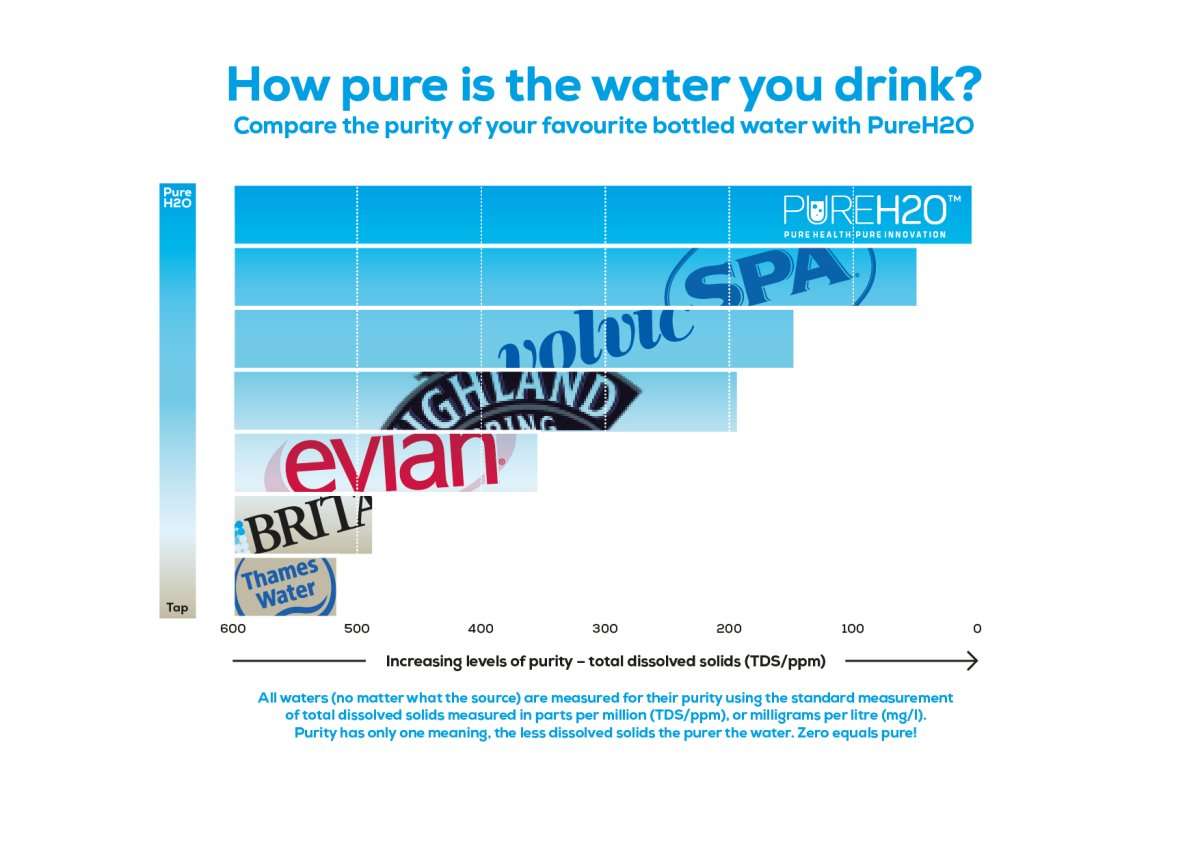
Eco-Friendly Alternative to Bottled Water: A Practical UK Guide
The most practical eco-friendly alternative to bottled water may be the one that makes single-use bottles unnecessary in your household routine. Buying and carrying bottled water can feel wasteful and inconvenient, yet taste preferences can make switching to tap water less straightforward. A home purifier may offer another option, but its environmental impact depends on more than the bottles it replaces.
This guide compares reusable bottles, filter jugs, tap filters and reverse osmosis, including the upkeep each requires and the wastewater reverse osmosis can produce. It also outlines what to check before choosing a purifier, so you can find a convenient source of drinking water and reduce routine reliance on bottled water without overlooking ongoing resource use.
Key Takeaways
- An eco-friendly alternative to bottled water should make drinking water convenient at home while reducing routine use of single-use bottles.
- Compare reusable bottles, filter jugs, tap filters and reverse osmosis by portability, capacity, consumables and upkeep.
- Consider the full environmental picture, including filter materials, packaging, energy use and any wastewater produced.
- Estimate household needs and check maintenance requirements before choosing a purifier. PurityPRO is one home reverse-osmosis option to explore.
What makes an eco-friendly alternative to bottled water?
An eco-friendly alternative to bottled water is a convenient source of drinking water at home that helps reduce routine reliance on single-use bottles. That could mean filling a reusable bottle from the tap, using a filter jug or installing an under-sink purifier. The format alone does not establish its overall environmental impact: filters, packaging, energy use and, for reverse-osmosis systems, wastewater also matter.
This guide considers practical habits and resource trade-offs, not whether UK tap water is safe. The environmental impact of bottled water also involves factors beyond the bottle itself, including packaging and transport.
For context on reducing reliance on plastic bottles, watch this video:
Can filtered tap water replace bottled water day to day?
For a household, the change is as much about routine as equipment. Bottled water must be bought, carried home, stored and chilled. A home option shifts the habit to filling a jug or reusable bottle and remembering to refill it before leaving. Whether that feels convenient depends on taste preferences, household use and how easily drinking water is available where it is needed.
A filter may change taste or provide a preferred way to access water, but it brings its own upkeep. Check which consumables it needs, how often they need replacing and how the packaging is managed. Reverse osmosis also produces wastewater, so include water use in your comparison. A realistic choice balances everyday convenience with these ongoing resource demands, rather than assuming that using less plastic automatically means a smaller overall footprint.
How to compare bottled-water alternatives by use, waste and upkeep
The most suitable eco-friendly alternative to bottled water depends on household habits, not simply on the filtration method. Compare everyday convenience with consumables and water use. A change that is difficult to maintain may not replace the bottled-water habit.
- Reusable bottle: Portable for work, travel or errands, but capacity is limited to what you carry. Regular washing and refilling are needed, and the bottle’s material and lifespan are worth considering.
- Filter jug: Easy to move around the home and useful for smaller batches, though chilling may take up fridge space. Check cartridge replacement arrangements, packaging and cleaning instructions.
- Tap or under-sink filter: A fixed option for a consistent supply at a chosen tap, rather than water on the move. Check the filter type, replacement schedule and installation requirements; if you need assistance with under-sink pipework and connections, learn more about RPH Plumbing for support with domestic plumbing.
- Reverse osmosis: A fixed purification system for household drinking-water use. Check whether its production rate and capacity suit household demand, along with filter and membrane maintenance, energy needs and model-specific recovery or wastewater figures.
Which home water option fits your routine?
A bottle or jug may suit lower-volume use or people who need water on the move, but its capacity and need for refilling may not suit every household. Installed filtration may be more convenient if you want a consistent supply at a dedicated tap. PureH2O’s home drinking-water purifiers offer system types to compare.
Recovery and wastewater ratios vary between reverse-osmosis models, so check current, model-specific figures rather than relying on assumptions about the category as a whole. No option should be judged on plastic reduction alone. Consumables, packaging, energy use, water demand and maintenance all contribute to the comparison.
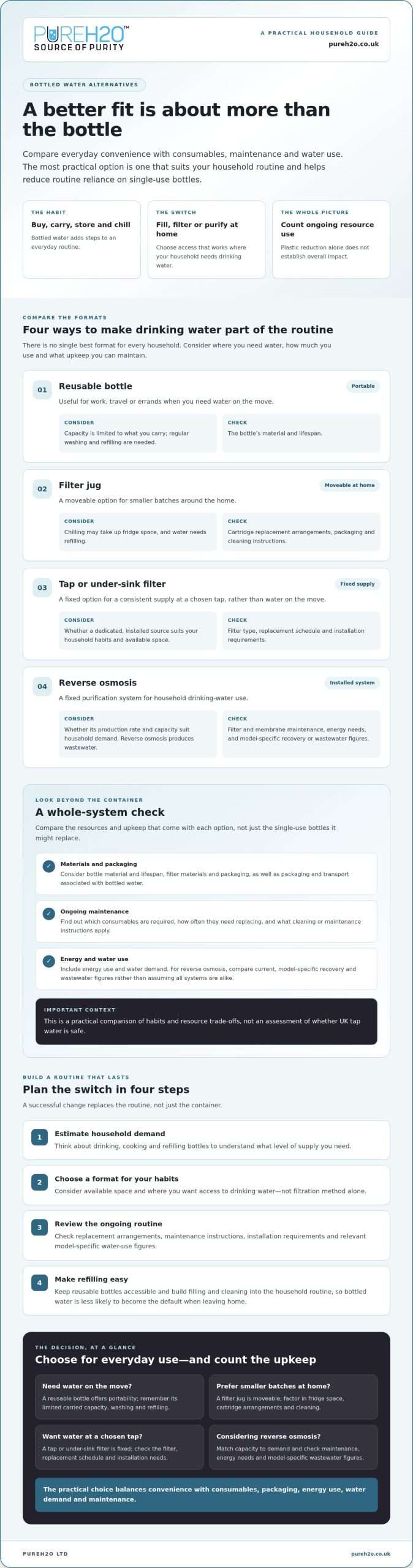
How to switch from bottled water to a home purifier
A successful switch replaces the routine, not just the container. Start by estimating how much drinking water your household uses and identifying where you need it, such as at the kitchen tap, chilled for meals or for filling bottles before leaving home. This gives you a practical basis for choosing between a jug, tap filter or installed system.
- Estimate demand. Consider household use for drinking, cooking and refilling bottles to work out what level of supply you need.
- Choose a format. Base your choice on household habits, available space and preferred access to drinking water, not on filtration method alone.
- Review the ongoing routine. Check filter and membrane replacement arrangements, maintenance instructions, installation requirements and model-specific recovery and wastewater figures. If you are fitting a dedicated tap alongside broader home updates, property maintenance services such as Polkadot offer practical advice on domestic plumbing work and project timelines.
- Make refilling easy. Keep reusable bottles accessible and build filling and cleaning into the household routine. This can help prevent bottled water becoming the default when someone leaves home.
What should you check before choosing a home purifier?
Reverse osmosis (RO) pushes water through a membrane to reduce specified substances. Output, recovery and wastewater ratios depend on the model. Assess current specifications against household demand, and check filter replacement and maintenance requirements before choosing a system.
PureH2O’s PurityPRO is a home reverse-osmosis option for households considering a potential eco-friendly alternative to bottled water, and was the first water purifier introduced as an environmental solution to bottled water brands as early as 1990. Listed features include stainless-steel components, leak detection, automatic isolation and auto-flush. The system is the most water and power-efficient system on the market today and produces sufficient water for all cooking and drinking requirements for a families.
PurityPRO home reverse osmosis product information can help you assess whether the system’s features and requirements suit your household.
Make your next water choice a considered one
An eco-friendly alternative to bottled water is not defined by filtration alone. Look for an option that fits household demand, makes drinking water convenient and helps reduce routine use of single-use bottles, while taking filter upkeep, energy use and any reverse-osmosis wastewater into account.
Match the format to daily habits, then check capacity, maintenance arrangements and current, model-specific specifications. PureH2O Ltd offers the PurityPRO home reverse-osmosis purifier. Product information lists stainless-steel components and monitoring features; check the details for the current model rather than treating these features as proof of environmental benefit.
Making refilling easy and choosing a system that suits your routine can help you make a more considered change.
Frequently Asked Questions
What is an eco-friendly alternative to bottled water?
An eco-friendly alternative to bottled water is a convenient source of drinking water that helps a household rely less on single-use bottles. Options include tap water in a reusable bottle, a filter jug, an installed filter or a reverse-osmosis purifier. Some offer a greener solution to others: compare consumables, packaging, energy use, maintenance and any wastewater as well as plastic reduction.
Is filtered tap water more environmentally friendly than bottled water?
It may reduce reliance on single-use bottles, but whether it has a lower overall environmental impact depends on the products and habits being compared. Bottled water involves packaging and distribution; filtration can involve cartridges, replacement packaging, energy and wastewater. Consider how often the household would use and maintain each option rather than assuming filtration always has the smaller footprint.
Can a reverse-osmosis purifier replace bottled water at home?
Yes, a reverse-osmosis purifier can provide drinking water at home and may replace routine bottled-water purchases if its capacity suits household demand. The system needs ongoing filter and membrane maintenance, and reverse osmosis produces wastewater, so check the current model’s recovery and wastewater figures. Assess a home option such as PurityPRO or RODI+ against these practical requirements rather than treating it as a guaranteed environmental solution.
How can I reduce bottled-water plastic waste at home?
Make refilling the easy default: keep clean reusable bottles accessible, fill them before leaving home and store drinking water in a reusable jug if you prefer it chilled. If household taste preferences lead to regular bottled-water purchases, compare filter options and their replacement-cartridge arrangements. Follow the chosen system’s maintenance instructions and consider how its filters and packaging are managed at end of use.
Explore PureH2O home water purification to compare available options and find a system that suits your household routine.
Disclaimer
The content of this article represents the views of the author and 36years practical experience.