
Contaminants in UK Tap Water: The 2026 National Report and Your Health
If your drinking water meets every legal safety standard, why does it still contain trace amounts of "forever chemicals" and microplastics? It’s a frustrating paradox that many British homeowners face. You’re told your supply is "safe" by regulatory bodies, yet you still see the white crust of limescale on your kettle and worry about the long-term health impacts of substances that shouldn’t be there at all.
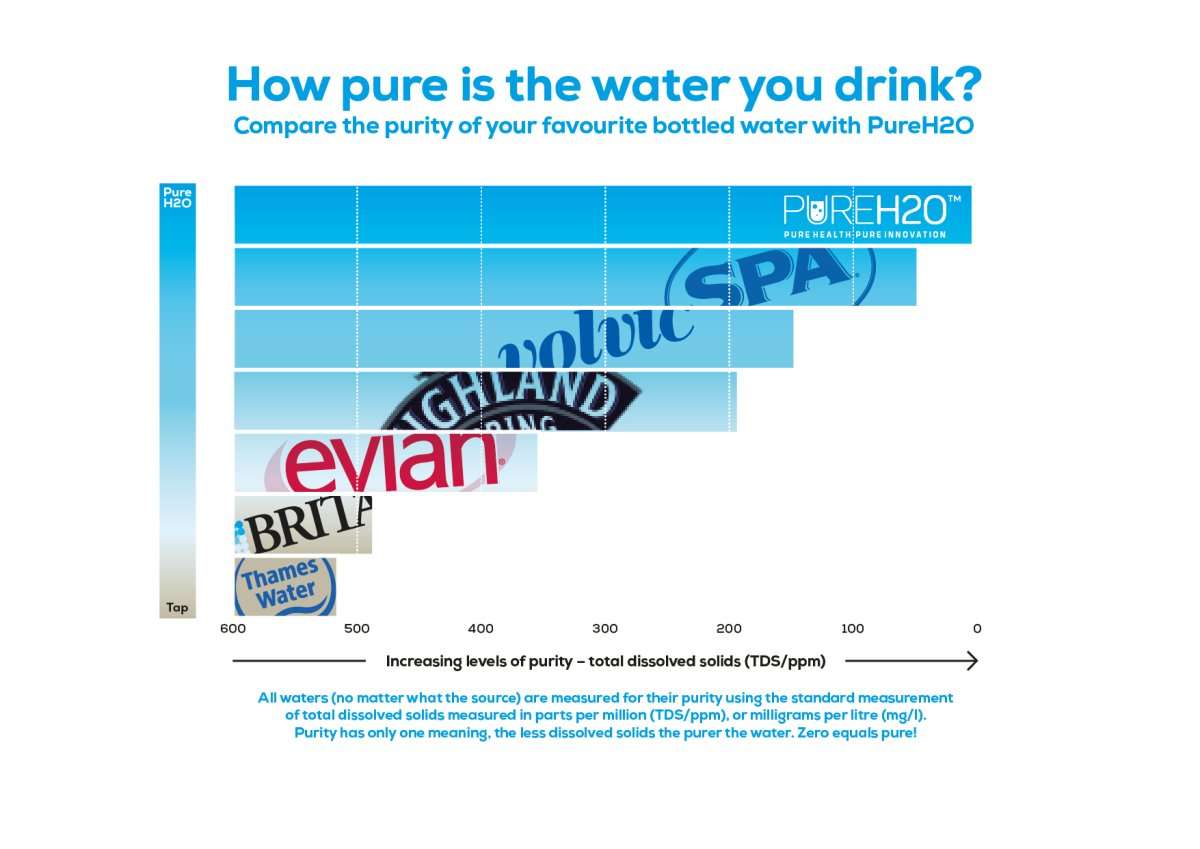
You may be surprised to learn that the Drinking Water Regulations were relaxed in 1999 after decades of British water companies getting fined by the EU Courts for failing to meet standards. Standards set pre-1999 were significantly more stringent permiting up to 500parts per million Total Dissolved Solids (500ppmTDS) in tap water. Yet beyond 1999 the wording "maximum permissible concentration" was altered to read "prescribed concentration level". Shocked? You should be, today Water Utilities can have up to 1500ppmTDS in tap water some 300% greater than pre 1999!
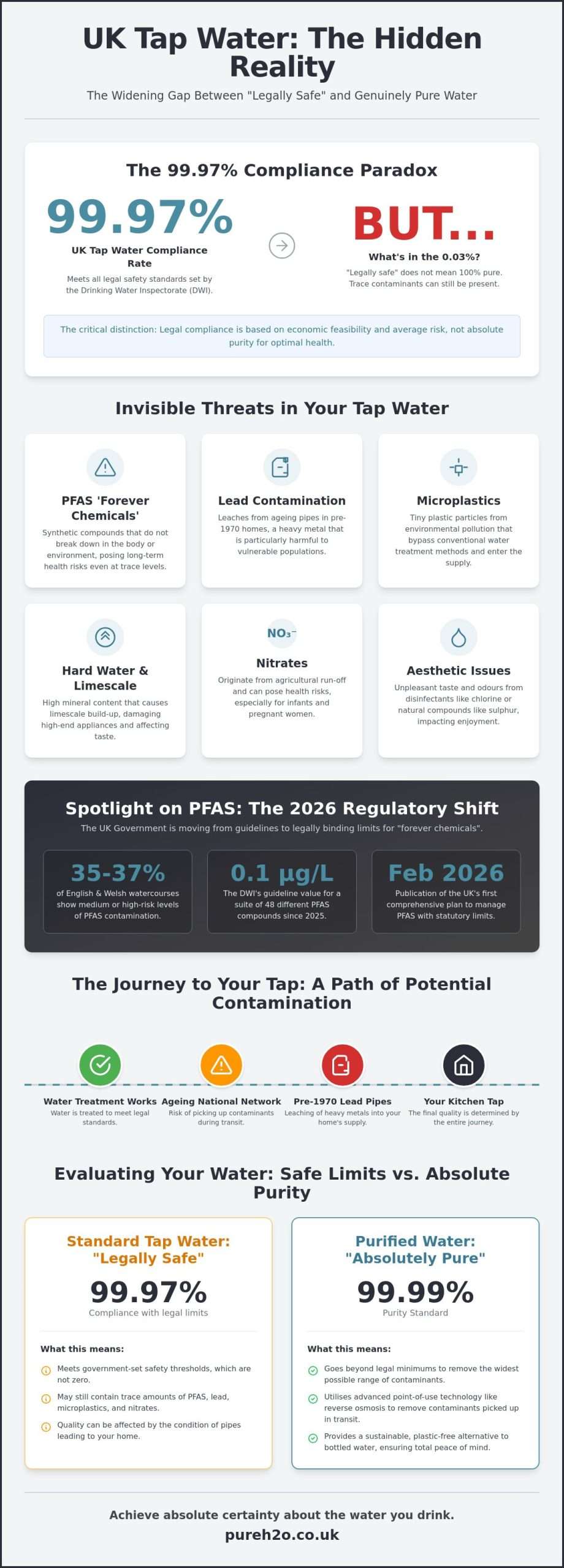
The latest contaminants in UK tap water 2026 report highlights that whilst compliance remains high at 99.97 per cent, the gap between legal safety and absolute purity is widening. This is especially true as the government moves towards new statutory limits for PFAS whilst public confidence sits at a record low.
This article will reveal the reality of what’s currently flowing through your pipes and explain why "safe" might not be good enough for your standards of health or your home. You’ll discover the specific risks highlighted in the 2026 national data and learn how to achieve absolute certainty about the water you drink. We’ll examine the impact of hard water on your high-end appliances and how bespoke British engineering provides a sophisticated, plastic-free solution for a truly sustainable lifestyle. By the end, you’ll understand how to bridge the gap between regulatory baselines and the 99.99 per cent purity your household deserves.
Key Takeaways
- Understand the critical distinction between legal compliance and absolute purity as detailed in the latest contaminants in UK tap water 2026 report.
- Learn about the UK Government’s 2026 PFAS Plan and why the shift towards statutory limits for “forever chemicals” is a vital consideration for your health.
- Identify the hidden risks posed by ageing infrastructure, including persistent lead contamination and the impact of hard water on high-end kitchen appliances.
- Discover the “99.99% Purity” benchmark and how proprietary reverse osmosis technology surpasses standard filtration and bottled water.
- Explore how bespoke British engineering provides a sustainable, plastic-free alternative that elevates your home lifestyle whilst protecting the environment.
The 2026 UK Water Quality Landscape: A National Overview
The UK water quality landscape in 2026 presents a complex picture of high-level compliance and hidden vulnerabilities. On the surface, the figures are reassuring. The Drinking Water Inspectorate (DWI) reports a 99.97 per cent compliance rate across England and Wales, a statistic that suggests near-perfect safety. However, this figure is a measure of infrastructure performance against specific legal thresholds, not a guarantee of absolute purity. Whilst the water leaving treatment works is heavily monitored, the journey to your kitchen tap is fraught with variables that standard testing often overlooks.
The contaminants in UK tap water 2026 report reveals that whilst public supplies generally meet statutory requirements, the definition of "safe" is increasingly under scrutiny. The DWI conducted 39 audits and managed 586 water quality events in 2025 alone, highlighting the constant pressure on our national network. We must distinguish between aesthetic concerns, such as the unpleasant taste of chlorine or the smell of sulphur, and the invisible chemical risks like PFAS and microplastics that bypass conventional filtration. The national average water quality score of 9.1 out of 10 reflects a system that is functional but remains imperfect for those seeking total refinement. 9.1 means that 9% of tests are failing the post 1999 reduced standards.
The Reality of "Safe" Drinking Water
Legal limits for contaminants are often a compromise between public health and economic feasibility. Setting a statutory limit requires water companies to invest billions in infrastructure upgrades; consequently, regulations often lag behind the latest scientific consensus on human health. For health optimisers and vulnerable populations, the delay between discovering a risk and enforcing a limit is simply too long. "Safe" water is designed for the average person, but it doesn’t always meet the standards of those who demand the pinnacle of health and absolute certainty. The contaminants in UK tap water 2026 report confirms that trace elements of various substances remain present even in compliant supplies. In 2009 the NRA reported that Methaldehyde breached maximum permissible levels by a factor of 100 x the "safe" limit. Methaldehyde, in case you didn’t know, is a slug poison used by farmers.Strangely, farmers used to burn stubble after harvest. As children we remember this seeing the flames in the fields, managed carefully by the farmers and smelling that sweet smell as the stalks were burned. Talking to farmers about this tradition had good grounds; they say that pests such as slugs were not so common when the stubble was burned. Today, burning is banned and the slugs proliferate as have the use of chcmicals and widespread water table contamination.
National Infrastructure vs. Household Purity
The quality of your water can change significantly the moment it enters your property. Thousands of pre-1970 homes across Britain still rely on ageing lead pipes, which can leach heavy metals into the supply despite the best efforts of water providers. You may be surprised to hear that as MDPE pipe works pass nearby Landfill sites, there are significant spikes of contaminants such as arsenic. These subterranean pipes may be water-tight, but they are still gas-permeable.
Even in newer homes and offices, the national water network has not been replaced in its entirey and that will always mean some pipes are sub standard. This means that point-of-use purification is no longer a luxury; it’s a necessity. Further, we cannot expect Water Utilities to produce pure drinking water; the costs would be prohibitive. Nor would it be sensible when 99% of water usage is for washing and ends up back in the sewer after a few seconds of use.
While municipal systems are constrained by scale, industrial-level advancements in desalination and chemical treatment continue to push the boundaries of water purification; to learn more about these global solutions, visit JAS Global Industries.
For truly Pure Drinking Water, the only real option is to take control of the water at the final few centimetres of the journey. Installing your own reverse osmosis system from PureH2O ensures that the water you consume is free from the lead, nitrates, and microplastics that may have been picked up during transit through the UK’s vast network of pipes.
PFAS and ‘Forever Chemicals’: Understanding the 2026 Regulatory Shift
Per- and polyfluoroalkyl substances, or PFAS, have become a defining challenge for the British water industry. Often termed "forever chemicals" due to their virtually indestructible carbon-fluorine bonds, these synthetic compounds do not degrade in the environment or the human body. The contaminants in UK tap water 2026 report highlights a pivotal moment in our national response to this threat. On 3 February 2026, the UK Government published its first comprehensive plan to tackle PFAS, signalling a transition from mere guidelines to legally binding statutory limits. Whilst the Drinking Water Inspectorate (DWI) has maintained a guideline value of 0.1 µg/L for a suite of 48 PFAS compounds since 2025, the move towards a formal legal standard reflects growing scientific unease regarding long-term exposure.
Current data suggests that approximately 35 to 37 per cent of English and Welsh watercourses show medium or high risk levels of PFAS contamination. For the discerning homeowner, the concern isn’t just about meeting a baseline. It’s about the gap between what is legally permissible and what is biologically ideal. Even at trace levels, these chemicals are the subject of intense research due to their persistence. The 2026 UK Water Quality Landscape report confirms that whilst our infrastructure is adapting, the process of removing these complex molecules from the national supply is an immense engineering undertaking that will take years to fully realise.
The Health Implications of PFAS Exposure
The primary concern with PFAS is bioaccumulation. These substances accumulate in the blood and organs faster than the body can eliminate them, meaning even infinitesimal daily doses can reach significant concentrations over decades. Leading researchers have linked this accumulation to endocrine disruption and other systemic health issues amongst UK populations. Most standard carbon filters found in basic jugs or fridge dispensers are inadequate for partial, let alone complete PFAS removal. To achieve true peace of mind, sophisticated technology like reverse osmosis is required to strip these molecules from your supply. If you are concerned about your local levels, an on site consultation can provide the scientific clarity you need.
Navigating the 2026 PFAS Enforcement Notices
The scale of the challenge is evident in the fact that 14 major UK water companies are currently operating under DWI enforcement notices specifically related to PFAS management. These notices are a double-edged sword; they demonstrate a commitment to improvement, but they also highlight existing vulnerabilities in the network. With remediation targets stretched out as far as 2031, many households face a five-year wait before infrastructure upgrades are completed. This lag time makes personal responsibility for water purity essential. Rather than waiting for national targets to be met, bespoke home purification allows you to bypass these systemic issues entirely, ensuring your family consumes only the highest standard of water today.
Beyond PFAS: Lead, Nitrates, and the Hard Water Crisis
Whilst the spotlight remains on PFAS and ‘Forever Chemicals’, other persistent threats continue to challenge the integrity of our domestic supply. The contaminants in UK tap water 2026 report reminds us that lead remains a significant risk in the millions of British homes built before 1970. Whilst the legal limit at the tap is currently 10 µg/L, advisory bodies are increasingly pushing for a reduction to 5 µg/L to better protect public health. This legacy of ageing infrastructure means that even if the water leaving the treatment works is pristine, it can become contaminated by the very pipes that deliver it to your kitchen.
Beyond heavy metals, our groundwater faces mounting pressure from modern agricultural practices. Nitrates and pesticides frequently leach into the water table, creating a seasonal fluctuation in water quality that standard municipal treatment struggles to eliminate entirely. This is compounded by the emerging issue of microplastics in the mains supply. These synthetic fibres, often too small to be seen by the naked eye, enter the system through various environmental pathways, making their way into the glasses of water we serve our families. Your health requires a barrier that addresses these microscopic intruders with absolute precision. Reverse Omosis systems such as the PurityPRO or RODI+ from PureH2O offer the most effective purification process on the planet.
Agricultural Impact: Nitrates and Pesticides
Intensive farming across the British countryside has led to a consistent rise in nitrate levels, with the current drinking water standard set at 50 mg/L. Whilst this limit is generally maintained, the presence of dissolved agricultural chemicals remains a concern for those seeking total purity. Traditional carbon filtration often fails to address these dissolved substances effectively. Our reverse osmosis technology provides a more robust solution, stripping away nitrates and pesticides to trace levels. This ensures that your drinking water remains untainted by the chemical runoff of the surrounding landscape, regardless of seasonal agricultural activity.
The Hidden Cost of Hard Water
The regional divide in water quality is most apparent when discussing mineral content. Data shows that 79.7 per cent of UK postcode districts now deal with water classified as hard or very hard, exceeding 200 mg/L of calcium carbonate. Whilst not a direct health risk, hard water is far from a mere aesthetic issue. It causes aggressive limescale accumulation that can devastate high-end kitchen appliances and boiling water taps, reducing their efficiency and lifespan.
The chemical behaviour of these minerals also affects your personal wellbeing, often leaving hair dull and skin irritated. By integrating PureH2O water softeners with our PurityPRO purification systems, you create a dual-layered defence. This bespoke combination provides the ultimate protection for your home’s infrastructure whilst ensuring the water you consume and wash with is of an unrivalled standard. Taking control of your home’s water chemistry is the only way to achieve the 99.99 per cent purity that defines a refined, health-conscious lifestyle.
Evaluating Your Risk: Safe Limits vs. Absolute Purity
The distinction between water that is legally compliant and water that is truly pure is the foundation of the PureH2O philosophy. Whilst the contaminants in UK tap water 2026 report confirms that our national supply is amongst the highest quality in the world, "high quality" remains a relative term. For those who prioritise health, the decimal points matter. A 99.99 per cent purity rate isn’t just a technical achievement; it’s a standard that ensures the removal of the complex synthetic compounds and microscopic particulates that standard regulations permit in trace amounts. As highlighted by the contaminants in UK tap water 2026 report, the gap between what is legally "safe" and what is biologically ideal continues to widen as new chemical threats are identified.
Many homeowners rely on basic filter jugs, believing they provide a sufficient shield. However, these systems are an inadequate defence against the sophisticated challenges of 2026, such as PFAS and dissolved nitrates. A simple carbon filter might improve taste by removing chlorine, but it leaves behind the invisible chemical risks that modern science is only beginning to fully understand. The PureH2O Difference lies in our British engineering heritage, where we’ve spent decades refining a process that treats water not just as a utility, but as a vital component of a refined, health-conscious lifestyle.
Standard Filtration vs. Reverse Osmosis
Carbon filters are essentially passive. They trap larger particles but allow many dissolved solids and complex chemicals to pass through. In contrast, our PurityPRO technology utilises a multi-stage reverse osmosis process to force water through a semi-permeable membrane, stripping away 99.99 per cent of contaminants. Because this process is so effective, we include a bespoke remineralisation stage. This restores essential minerals to the water, ensuring a balanced pH and a crisp, refreshing taste that rivals the world’s finest springs. It’s the only way to achieve absolute certainty about the purity of every drop you drink.
The Environmental Cost of the "Safe" Narrative
The "safe" narrative provided by water companies often fails to reassure the public, which drives a heavy reliance on bottled water. This creates a significant environmental impact, with billions of plastic bottles entering the waste stream annually. A home purification system offers a sustainable, plastic-free alternative that actually exceeds the purity of most premium bottled brands. You can embrace an environmentally responsible, plastic-free lifestyle without compromising on the quality of the water you consume. It’s a choice that protects both your long-term health and the future of our British landscape. To secure this level of protection for your own home, discover the PureH2O Home Water Purifier and our range of bespoke purification solutions.
The PureH2O Solution: Achieving 99.99% Purity at Home
The PureH2O solution offers an immediate, uncompromising answer for the discerning homeowner. We don’t believe in "safe enough." Our mission is to provide absolute certainty through bespoke systems that align with your health standards and your home’s aesthetic. By choosing PureH2O, you’re investing in over thirty years of British engineering excellence, ensuring that every drop of water in your household meets the pinnacle of 99.99 per cent purity.
Whether you’re navigating the hard water challenges of the South East or the industrial legacy of Northern cities, our systems are configured to address your specific needs. This isn’t just about removing impurities; it’s about elevating your daily rituals. From the clarity of your morning tea to the protection of your high-end kitchen appliances such as steam ovens or coffee machines, the PureH2O difference is felt in every aspect of your domestic life. It’s a commitment to a lifestyle where health and luxury are expertly entwined.
PurityPRO: Engineered for Excellence
The PurityPRO Home Water Purifier is the cornerstone of our purification suite. It utilises a proprietary reverse osmosis process to eliminate microplastics, PFAS, and nitrates that the contaminants in UK tap water 2026 report identifies as persistent challenges. Designed with the modern British kitchen in mind, its space-saving under-sink configuration ensures that high-performance technology doesn’t compromise your interior design. Our commitment to your long-term health extends beyond the initial installation; we provide a comprehensive maintenance service, including replacement filter cartridges and sterilisation, to maintain unrivalled standards of purity year after year.
Quatreau: The Ultimate Smart Tap
A truly refined lifestyle requires technology that is as functional as it is beautiful. The Quatreau Smart Tap integrates our 99.99 per cent pure water with instant boiling, chilled, and sparkling options at a single touch. It’s more than a kitchen appliance; it’s a statement of environmental responsibility. By removing the need for bottled water, the Quatreau facilitates a plastic-free future whilst significantly reducing your household’s environmental impact. It’s little wonder that this tap has become the favourite choice for leading architects and designers who demand the very best in British-made innovation.
Investing in PureH2O means choosing longevity and precision. Our systems are built to last, providing a dependable source of purity that grows with your family. By integrating the PurityPRO with a Quatreau Smart Tap, you create a seamless, high-performance water hub that serves as the heart of a sustainable, health-conscious home. Experience the peace of mind that comes from knowing your water is not just legally compliant, but scientifically pure.
Secure Your Absolute Standard of Purity
The contaminants in UK tap water 2026 report demonstrates that whilst the national supply meets official standards, the burden of ensuring absolute purity remains a personal choice. We’ve explored how regulatory limits often lag behind scientific health research, particularly regarding the bioaccumulation of PFAS and the persistent presence of microplastics. Relying on ageing infrastructure to protect your wellbeing is no longer the only option. You can take immediate control of your home’s water quality with technology that exceeds the baseline and reaches for the pinnacle of refinement.
As official 2026 water quality experts, we’ve provided British engineering since 1991 to bridge this gap. Our 99.99% Purity Guarantee isn’t just a metric; it’s a promise of a healthier, more sustainable lifestyle that protects your family and your high-end appliances. Don’t wait for national remediation targets to be met in the coming decade. You deserve the unrivalled clarity that only bespoke purification can provide. Experience the PureH2O Difference: Book Your free consultation Today and begin your journey toward a future of absolute purity.
Frequently Asked Questions
Is UK tap water safe to drink in 2026?
UK tap water fails to meet legal standards at least 0.03% of the time according to the compliance rate reported by the Drinking Water Inspectorate. "Safe" merely means the water meets the minimum statutory requirements for public health, standards that were relaxed 300% in 1999. It doesn’t mean the water is free from impurities. If you read an analysis from one of the Utiltities don’t assume that prescribed concentration means you are supposed to drink it. Many homeowners find that legal limits for substances like PFAS and nitrates don’t align with their personal standards for absolute purity and long-term health optimisation.
What are the main contaminants found in UK tap water?
The contaminants in UK tap water 2026 report identifies PFAS (forever chemicals), lead, nitrates, and microplastics as primary concerns. Whilst chlorine is added to kill bacteria, its byproducts can affect taste and odour. Additionally, over 79 per cent of UK postcode districts suffer from hard water minerals. These contaminants often bypass standard municipal treatment or enter the supply through ageing infrastructure before reaching your kitchen tap.
How do I know if my home has lead pipes?
You can check the pipe leading to your internal stopcock, which is usually located under the kitchen sink. Lead pipes are a dull grey colour and are soft enough to be scraped with a coin to reveal a shiny, silver surface. If your property was built before 1970, there’s a higher risk that lead remains in the internal plumbing or the communication pipe connecting your home to the mains.
Does reverse osmosis remove PFAS from drinking water?
Yes, high-performance reverse osmosis is widely recognised as the most effective technology for stripping "forever chemicals" from a water supply. Unlike basic carbon filters, our PurityPRO systems use a semi-permeable membrane to remove these indestructible synthetic compounds. This process ensures that PFAS and other complex molecules are reduced to trace levels, helping you achieve a 99.99 per cent purity standard in your home.
Are there microplastics in UK tap water?
Microplastics are increasingly detected amongst UK water supplies as they are small enough to pass through all standard treatment processes. These microscopic synthetic fibres enter the water cycle through various environmental pathways, including laundry runoff and industrial waste. Achieving a plastic-free lifestyle involves more than just avoiding bottles; it requires the power of a point-of-use reverse osmosis purifier with a 0.0001 micron rating to ensure these particles don’t end up in your drinking glass.
Why should I choose a British-made water purifier?
Choosing British-made technology ensures your system is specifically engineered for the unique challenges of UK water chemistry, such as extreme hardness. PureH2O has been at the forefront of British water innovation since 1991, offering a level of craftsmanship and dependable service that imported systems can’t match. It’s an investment in local engineering heritage that guarantees longevity and meticulous attention to detail for your home.
What is the difference between a water filter and a water purifier?
A water filter typically uses activated carbon to improve the taste and odour of water by removing chlorine. A water purifier, such as our PurityPRO, uses advanced reverse osmosis to remove dissolved solids, heavy metals, and chemical contaminants at a molecular level. Whilst a filter makes water taste better, only a purifier can deliver the 99.99 per cent purity that defines the PureH2O difference.
How much does a PurityPRO home water purifier cost to maintain?
Maintenance for a PurityPRO system is designed to be effortless whilst ensuring your water remains at peak purity. This involves the periodic replacement of bespoke filter cartridges and sterilisation to prevent bacterial growth. By following a structured maintenance schedule that costs just £1/day, you protect your health and yuor investment and ensure your system continues to provide unrivalled protection against the risks highlighted in the contaminants in UK tap water 2026 report.
Disclaimer
The content of this article represents the views of the author and 36years practical experience.